FR
FR  EN
EN 

Vous avez du mal à prendre des résolutions pour la nouvelle année ? Psychologue clinicienne agréée et fondatrice de la clinique, Michelle Sorensen, La thérapie d'Ottawa pour un changement durable, explique pourquoi la volonté échoue et présente trois stratégies fondées sur des données probantes qui fonctionnent réellement. La thérapie d'Ottawa pour un changement durable.
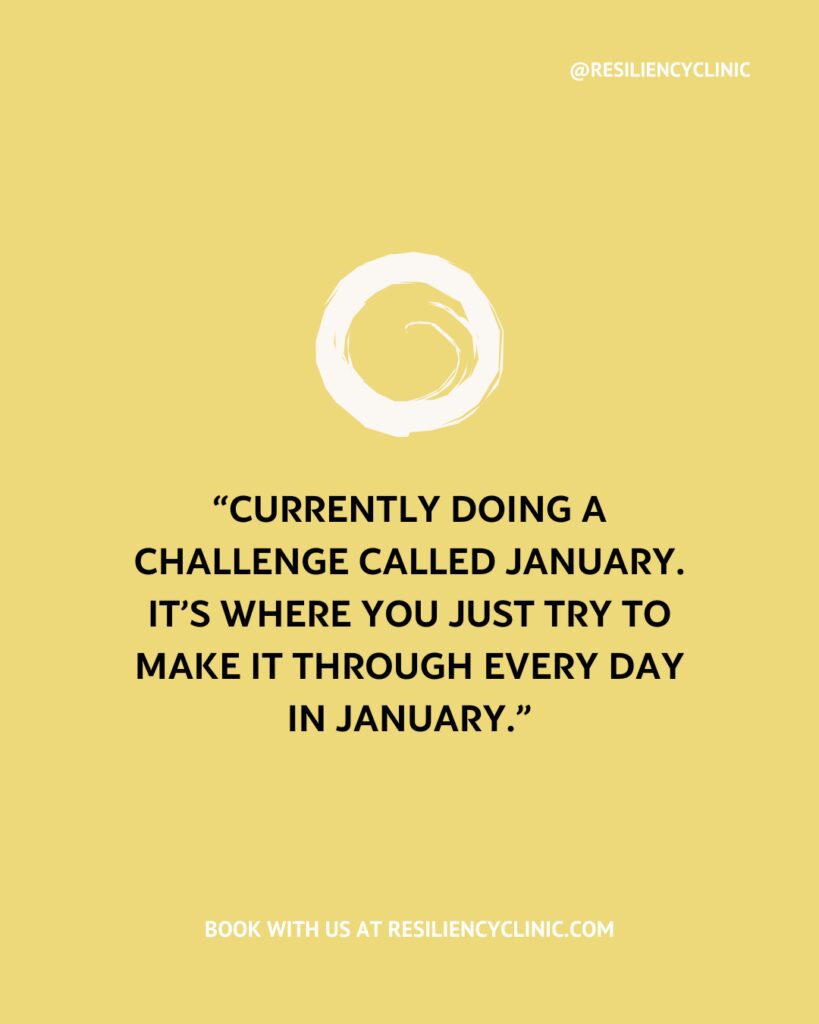
“Je suis en train de relever un défi appelé ”janvier". Il s'agit d'essayer de tenir tous les jours du mois de janvier."
J'ai récemment vu ce mème qui m'a fait rire, mais qui sonnait aussi douloureusement vrai pour beaucoup de gens. Ici, à Ottawa, nous avons connu un hiver canadien très classique. Beaucoup de neige, de nombreuses journées avec des températures inférieures à zéro, et des virus difficiles à combattre qui circulent. Il n'est pas étonnant que les gens soient épuisés !
Si vous vous êtes fixé des objectifs ambitieux pour la nouvelle année et que vous êtes déjà déçu par vos résultats, essayez de ne pas vous décourager. Vous n'avez pas besoin de plus de volonté ou de discipline. Vous avez peut-être simplement besoin d'une autre façon d'envisager les objectifs.
Le sens du but, la motivation et la volonté de réussir en 2026, que ce soit dans le domaine de la santé, de la vie personnelle, du travail ou de la famille, peuvent réellement vous aider à trouver l'énergie et l'espoir nécessaires pour essayer quelque chose de nouveau. Mais pour cela, il faut d'abord être plus gentil avec soi-même sur la situation dans laquelle on se trouve en ce moment.
Pourquoi les résolutions du Nouvel An échouent (ce n'est pas ce que vous pensez)
La plupart des résolutions et des objectifs du Nouvel An s'effondrent à la mi-février, non pas par manque de discipline, mais parce qu'ils reposent sur le principe du "tout ou rien". C'est l'un des schémas de pensée les plus courants qui entravent la réalisation des objectifs.
Nous nous fixons des objectifs ambitieux : Je vais faire du sport cinq jours par semaine ! Je vais préparer mes repas tous les dimanches ! Je vais enfin m'organiser ! Ces grands objectifs nous inspirent au début, mais lorsque la vie nous tombe dessus (un enfant malade, une échéance professionnelle, une semaine difficile), nous nous sentons comme des ratés et nous abandonnons complètement l'objectif.
Que se passe-t-il donc réellement ? Il ne s'agit pas d'un problème de volonté. Il ne s'agit pas non plus d'un défaut de caractère ou de paresse. Il s'agit en fait d'un problème de système nerveux. Lorsque vous êtes déjà à bout de forces, surtout pendant les mois sombres et froids de l'hiver, votre cerveau est en mode survie, et non en mode transformation. En ajoutant de la pression par le biais d'objectifs rigides, vous augmentez le stress et l'évitement au lieu de créer un élan.
La bonne nouvelle ? Il existe une meilleure façon d'aborder les objectifs, qui s'appuie sur le fonctionnement de votre cerveau, et non pas contre lui.
Trois stratégies qui fonctionnent vraiment
1. Construire des systèmes, pas seulement Fixation d'objectifs Cadres
Vos résolutions et objectifs sont axés sur résultats, Les changements ne sont pas toujours faciles à mettre en œuvre, mais lorsque vous vous concentrez sur la mise en place de systèmes, vous obtenez des changements durables. Concentrez-vous sur la mise en place de systèmes qui vous aident à réussir, en ajoutant à vos routines et à vos habitudes un petit changement à la fois. Voici la différence :
A objectif pourrait être : “Je veux faire de l'exercice cinq fois par semaine” ou “Je vais manger plus sainement cette année”.”
A système est : “Je mets mes vêtements d'entraînement avant de me coucher.” ou “Je prépare les ingrédients de mon déjeuner tous les dimanches, de sorte qu'il est plus facile de prendre quelque chose de sain que de commander un plat à emporter.”
Voyez comment on se concentre sur le résultat, tandis que l'autre se concentre sur sur les petites actions qui rendent le résultat possible? Ces petits pas sous forme de‘systèmes‘L'objectif peut sembler plus facile à atteindre et plus durable.
Je travaille souvent avec des clients qui ont passé des années à essayer de s'en sortir par la seule force de leur volonté. Une personne m'a récemment confié qu'elle s'était reproché pendant dix ans de ne pas faire d'exercice de façon régulière. Pourtant, la honte ne l'a jamais poussé à faire de l'exercice. vouloir d'aller à la salle de sport. Lorsque nous avons commencé à mettre en place une petite routine matinale (une marche de 5 minutes en écoutant leur podcast préféré), ils ont finalement trouvé la cohérence. Non pas parce qu'ils sont soudainement devenus plus disciplinés, mais parce que l'objectif leur semblait enfin réalisable.
On peut se dire “mais les petits objectifs ne me mèneront pas assez vite là où je dois aller” ou “et si je n'ai pas le temps de faire des petits pas ?”. C'est là que notre cerveau nous joue des tours. Nous pensons qu'il faut de grands changements pour progresser, mais la recherche montre le contraire : les petites actions cohérentes (même celles qui sont ennuyeuses !) s'accumulent au fil du temps. La personne qui lit une page par jour achèvera plus de livres que celle qui attend un “week-end de lecture parfait” qui ne vient jamais.
Par exemple, si les matins sont toujours agités et anxiogènes, commencez par mettre en place un système de préparation du sac à lunch le matin. Vous pouvez même préparer des aliments, tels que des en-cas sains ou un sandwich, et les avoir prêts à l'emploi dans le réfrigérateur. Ces petites mesures peuvent rendre la matinée plus facile à gérer.
De la même manière, peut-être disposerez-vous vos vêtements pour le travail avant de vous coucher ou, si vous avez des enfants, leur demanderez-vous de choisir leurs vêtements la veille au soir. L'une de mes filles (bien sûr, celle du milieu... c'est toujours le charmant enfant du milieu !) avait l'habitude de disposer toute sa tenue sous la forme d'une personne sur le sol de sa chambre. Elle s'amusait beaucoup avec ça, et le débat sur ce qu'elle devait porter n'avait plus lieu d'être lorsqu'elle était fatiguée le matin !
Il est étonnant de constater la différence que peuvent faire ces petits pas. à l'avance de temps pour se donner les moyens de réussir.
Quel petit système pourriez-vous mettre en place cette semaine ? Il peut s'agir d'étendre les vêtements, de préparer les déjeuners ou de placer votre équipement d'entraînement près de la cafetière. Choisissez-en une seule et remarquez comment elle change votre matinée.
2. Pratiquez l'autocompassion (elle améliore réellement les performances)
La vie est imprévisible. Si les choses ne se passent pas comme prévu, focus on what you did do or on the rest you decided you needed, or the curveballs you survived. There’s always something you can appreciate about your efforts. And here’s the part most people don’t know: starting with self-appreciation actually increases motivation and hopefulness, rather than draining your energy with self-criticism and a sense of failure.
Many people resist self-compassion because of unspoken rules they live by:
— “If I’m nicer to myself, I’ll lose my edge. I won’t get things done.”
— “If I’m self-compassionate, I’ll become lazy or overconfident.”
Actually, research shows the opposite. Studies consistently demonstrate that self-compassion improves performance rather than undermining it. People who practice self-kindness are more likely to persist after setbacks, set realistic goals, and maintain motivation over time. That’s the exact opposite of what self-criticism achieves.
This makes sense whether you’re trying to clean your house or train for a half marathon. When people push too hard through self-criticism (which, let’s be honest, most of us are experts at), they become dysregulated. They overtrain and injure themselves, or they burn out completely. Being kind to yourself means you can pace yourself, avoid injury in the case of physical exertion, and avoid irritability and burnout when it comes to chores, workload, parenting, or other daily tasks.
3. Make It Easy and Enjoyable
Start with very small, attainable goals. This sounds obvious, but most people still choose something they end up avoiding because it feels like too much. For example, if you want to read more, plan to read one page each morning during your tea or coffee time. Pairing it with an enjoyable activity helps, but making it a very small action step is even better. Then practice that self-appreciation and feel great about reading the one page.
Here’s why this matters: avoidance makes anxiety greater because we’re teaching ourselves we’re not capable. If you approach one small task you’ve been dreading, you’ll see your anxiety go down—because it now seems possible to do more.
If you’re avoiding preparing your taxes (nobody’s favorite task, I know), even choosing a spot to start gathering paperwork is a great first step. If you tell yourself you need to set aside a whole afternoon to focus on taxes, you’re likely to decide today is not the day. Ever noticed that?
When you take that tiny first step (like choosing where to put the tax receipts, or reading just one page), something shifts. Your anxiety decreases because the task feels possible now. That builds confidence. And confidence creates momentum that actually lasts. If you’re struggling with l'anxiété, you can read more about it ici.
Why February Is Often the Hardest Month
Many people believe January 1st is the perfect time to start changing your life. But here’s what I see in my practice: February is often when people struggle most. The novelty of the new year has worn off, the days are still dark, and for many, seasonal depression is peaking. Valentine’s Day can add extra pressure. Tax season looms. And if your January goals didn’t stick, you might be dealing with a heavy layer of self-criticism on top of everything else.
If you’re feeling stuck, overwhelmed, or like you’re just white-knuckling your way through winter, you don’t have to do this alone. With these strategies in mind, any day can be the day you start making changes—without that January “new year, new you” pressure.
If you’re noticing that the dark days are affecting more than just your goals or if you’re feeling persistently low, unmotivated, or detached, you might be experiencing seasonal depression. This is incredibly common in Ottawa winters, and it’s treatable. You don’t have to wait until spring to feel better.
Ready to Try a Different Approach?
At The Resiliency Clinic, we help overwhelmed adults understand pourquoi they struggle with goals, motivation, and self-criticism—not just what to do about it. We specialize in evidence-based therapy for anxiety, burnout, perfectionism, and building psychological flexibility. Remember that “January challenge” meme? You don’t have to white-knuckle your way through February too. We can help. Réserver une consultation gratuite de 15 minutes to explore how we can support you.
This blog post is for informational purposes only and is not a substitute for professional mental health care. If you’re struggling with persistent anxiety, burnout, or mental health concerns, please reach out to a qualified therapist.