EN
EN  FR
FR 
Eight years ago, Resiliency Clinic was one office without a name and without colleagues. Founder Michelle Sorensen, registered clinical psychologist, on what building it has taught her about staying grounded, and why the personal touch still matters most.
This summer marks eight years since I opened the Resiliency Clinic in Ottawa. In spring 2018 I was getting ready to start, though I did not yet have a name for it or a single colleague. I had a stable practice of my own, in Ottawa and about twenty years total in the mental health field. I knew there was always a need for great office space for allied health professionals. I was regularly passing on referrals I could not fit into my own schedule, week after week, so I knew I could help other therapists build their practices alongside me. My children were still young, out of the baby years, two seven-year-olds, a nine-year-old and an eleven-year-old. The timing felt right, so I took the plunge.
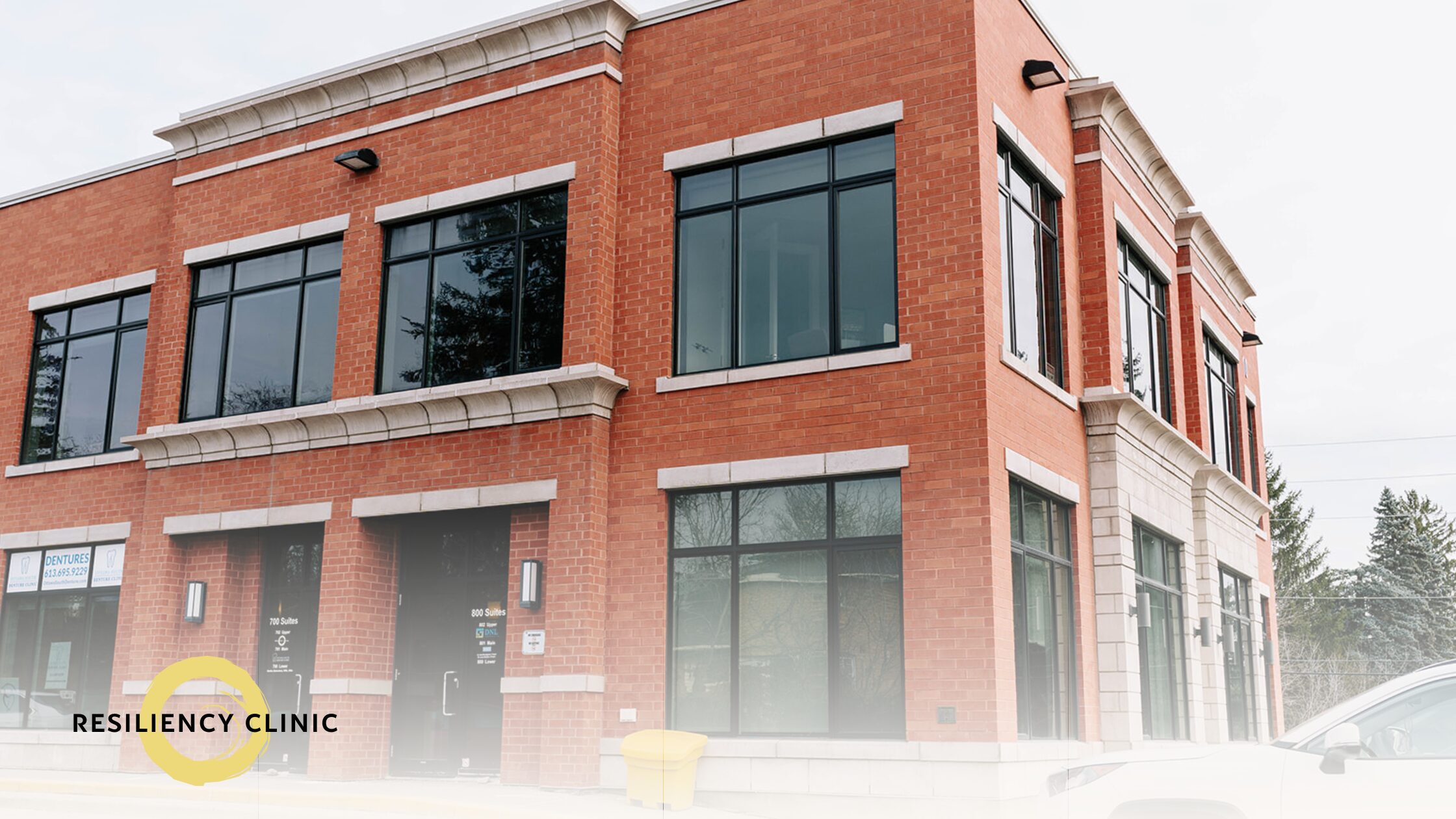
I bought a commercial condominium on Prince of Wales Drive, in a development I had been interested in since they started construction. I had held off and rented there first, waiting for the right moment. When I checked the builder’s website in 2018 and saw only one new unit was left, I decided to go for it. I loved the setup of the building, the free parking and the location!
In the early months I threw everything I had into getting off the ground: spreading the word, choosing a brand, attracting colleagues, and setting up professional offices one by one. The name started as Ottawa South Resiliency Clinic before I shortened it to Resiliency Clinic. There were surprises, like the cost of property tax on commercial space, and there were failures, like advertising money spent trying to find colleagues that led nowhere. Gradually things came together. The pandemic arrived in our second year and permanently changed the therapy world, with the sudden shift to virtual sessions and therapists seeing clients from home.
I never expected to expand into a second unit, and then a third, within the first five years. It has now been eight years since I opened that first space. Here are eight of the lessons that keep me grounded and focused on why the clinic exists, which is quality care for clients in Ottawa and beyond.

Authenticity matters
Over eight years, the thing that has mattered most is being real with people. I still pick up the phone and spend half an hour with a prospective client, helping them choose the right therapist, learning about their situation or a loved one they are worried about. I do not do it for income. I do it because I care about people getting the right help. Every therapist at Resiliency Clinic offers a free 15-minute consultation, so the first step is a conversation rather than a commitment, and the anxiety of a first session eases a little before it begins.
Clients remember that. When a colleague needs a referral, or a friend mentions an adult child who is struggling, they pass our name along. Our reputation is built on the human connections that happen long before anyone sits down in a therapy room. In a world of large corporations, that personal touch still means something to people, especially for something as important as choosing a therapist.
Business owners need a village too
We often tell clients to look at what they can hand off, and where they can ask for help, when they are stretched thin by parenting, work, or the running of a household. Business owners need that same village. It took me time, and a few false starts, to find the right marketing help, the right bookkeeper, the right accountant, and a contractor I can call when something in the building breaks. Now that I have a group of reliable people around me, the whole clinic runs more smoothly and I sleep better at night. Walking away from an arrangement that is not working is hard but important, and it usually makes room for better energy on both sides.
Water the flowers, not the weeds
When you are juggling clients, colleagues, contractors, and everything else, your mind fills up with worries and frustrations. I choose, over and over, to put my attention on what is going well and on moving forward. It is a choice to let go of the noise and the things I cannot control. The team of mental health professionals here makes that easier. I spend part of every day in supervision, and their care for their clients and their love of the work reminds me where my attention belongs.
All feedback is useful feedback
Most of what comes back to us is encouraging, and I am grateful for that. When someone shares a harder truth, I try to listen closely and learn from it. One email stands out. It came from a person who had never been to the clinic but had looked at us online and wanted to offer some free advice. For a mental health clinic, they said, our website was far too smiley, and they found it off-putting. I could have been defensive. Instead I opened the site and scrolled through the photos and bios of our therapists. We put real money into professional photography, because a client choosing their therapist deserves a team page worth looking through. Maybe, I thought, we need to tone down the smiles. I went through it, decided the expressions were about right, and still took the note seriously. I cannot please everyone, but I will always listen to any complaints and concerns!
Listen to the people you serve
We have to listen to our clients, and then act. When therapists and clients raised concerns about our video platform, a well-known psychology-focused service, we moved to Jane, which is easier to use and has better video quality. The switch was a lot of work at first, and it was worth it to keep the people who work here and the people we serve comfortable. A big change like that means facing my own anxiety and sitting in the discomfort. That is only fair. We spend our days telling clients that you cannot lower anxiety by avoiding it, you have to approach it.
Environment matters
We put real care into how the clinics look, professional and inviting at the same time. When someone comes in to open up about something painful, the room should hold them: prints on the wall, comfortable furniture, soft colours, spaces that are looked after. It makes a difference for the therapists too, who spend their days in those rooms.
The hardest things are usually the most meaningful
The hardest things in life are almost always the most meaningful. I saw it clearly in 2006, when I sat my registration exams while heavily pregnant with my first daughter, then did my oral exam in front of a committee of my psychology peers at eight months pregnant. It was a hard year of working and studying, six years after my Master’s and the supervised practice that followed. The sense of accomplishment at the end made all of it worth it. Resiliency Clinic has given me that same feeling. I worked evenings and weekends in the early years, playing every role on top of my daytime clinical work, and it has brought me real joy.
Hard times come, and so do the helpers
Life is not meant to be easy, and business ownership proves it. In the summer of 2025, a fire started in the electrical room on the side of our building. I never imagined we could go months without power, or that I would be opening an insurance claim to get us hooked up to enormous generators in the parking lot. We adapted in a dozen ways, and mostly I took it day by day and did what was within my control to keep clients in care and get my colleagues back to work. I knew it could have been worse. We had no smoke damage, and unlike the units next to the electrical room, no water damage. On the day of the fire itself, someone backed into my car in a parking lot and handed me one more problem to solve! What a day!
Life is unpredictable, and inside the hard stretches there are always helpers and small kindnesses. One morning I walked into my office and found a basket of gifts from my colleagues, thanking me for getting us set up to work again. There is always something, or someone, to be grateful for.
Eight years of Resiliency Clinic
Eight years in, it means a great deal to look back on this growth. If you have read this far, thank you. I cannot put into words what it means to have this community pass our name along and tell people about the Resiliency Clinic.
If you are thinking about therapy for yourself or someone you love, you can start with a free 15-minute consultation. It is a low-pressure way to ask questions and find out whether working with one of our therapists feels right.