EN
 FR
When it comes to food and body image, there can be a slippery slope between everyday concerns and patterns that begin to interfere with your relationship with food, your body, and your life. This post looks at three early signs of disordered eating, and what to do if you recognize them.
You don’t need to have a diagnosed eating disorder to reach out for support.
Maybe you’ve noticed that you’re thinking more and more about what you eat, how your body looks, or whether you’ve “earned” certain foods. You may be caught in a cycle of restricting food, dieting, then overeating because you are so hungry, feeling guilty, and then starting the cycle all over. These patterns can be difficult to break on your own, and talking about them can help prevent them from becoming more entrenched.
Is food or your body taking up more mental space than you’d like, or do your thoughts feel a little obsessive? Consider whether any of these sound familiar.
Early signs of disordered eating
1. Restricting food to “save up” for an occasion
Do you skip meals or significantly reduce what you eat earlier in the day because you’re going out for dinner, attending a party, or know you’ll be eating something you normally consider off limits?
What can seem like a reasonable strategy at the time can sometimes contribute to a cycle of restriction followed by intense hunger, overeating, guilt, and renewed restriction.
2. Frequently checking or scrutinizing your body
How often do you look at your body in the mirror and assess what you see? Do you examine parts of your body, scrutinize your stomach or thighs, compare yourself with others, or repeatedly look at yourself from different angles? Even just looking in the mirror a lot can be a red flag for the kind of self-appraisal that leads to disordered eating.
Body checking can become a habit that keeps your attention focused on perceived flaws and your physical appearance, rather than all the wonderful things you could be doing or experiencing.
3. Letting the number on the scale determine what or how much you eat
Do you weigh yourself and then make decisions about your food intake based on the number?
For example, you may feel that you need to eat less because the number is higher than you expected, or perhaps you give yourself permission to eat more because the number is lower. When the scale begins to determine your food choices, it can be a sign that your relationship with food and your body may be too rigid.
You can get help before it becomes a crisis
At Resiliency Clinic, we work with people across the spectrum of body image concerns and disordered eating. This includes people who have a diagnosed eating disorder, as well as those who are noticing troubling patterns and want to change them before they become more difficult to manage.
Therapy may help you:
- Build a toolbox of alternative coping skills that don’t involve controlling food intake or the number on the scale.
- Explore where your patterns came from, including how behaviours such as binge eating, emotional eating, or restricting may have developed as ways of coping.
- Understand the relationship between emotions, thoughts, food, and body image, so you can respond differently when difficult feelings arise. We use cognitive behavioural therapy (CBT) techniques to develop this understanding.
- Learn strategies for dealing with criticism and comments about your body or eating, including comments from family members, partners, friends, or others. Boundaries can be especially helpful during family gatherings and other situations where these comments come up. Therapy is a good place to prepare ahead of time and decide on the boundaries that work for you.
- Develop a more flexible relationship with food rather than feeling that you need to constantly control your hunger and limit your food intake. We sometimes draw on the Intuitive Eating approach (developed by dietitians Evelyn Tribole and Elyse Resch) to help clients tune into what they need physically. It is a non-diet approach that helps clients notice hunger and fullness cues.
- Work on body image and reduce self-criticism, so that your sense of self isn’t determined by how your body looks. Increasing self-compassion and self-acceptance is very important to this work.
Our Therapists
Finding a therapist who is a good fit makes a difference. It helps to work with someone you feel comfortable talking to, and someone who focuses on the concerns you’re bringing. Several of our therapists work with body image, disordered eating, and people’s relationship with food. You can read about each of them below. A free 15-minute consult is a good way to see whether it feels like the right fit.
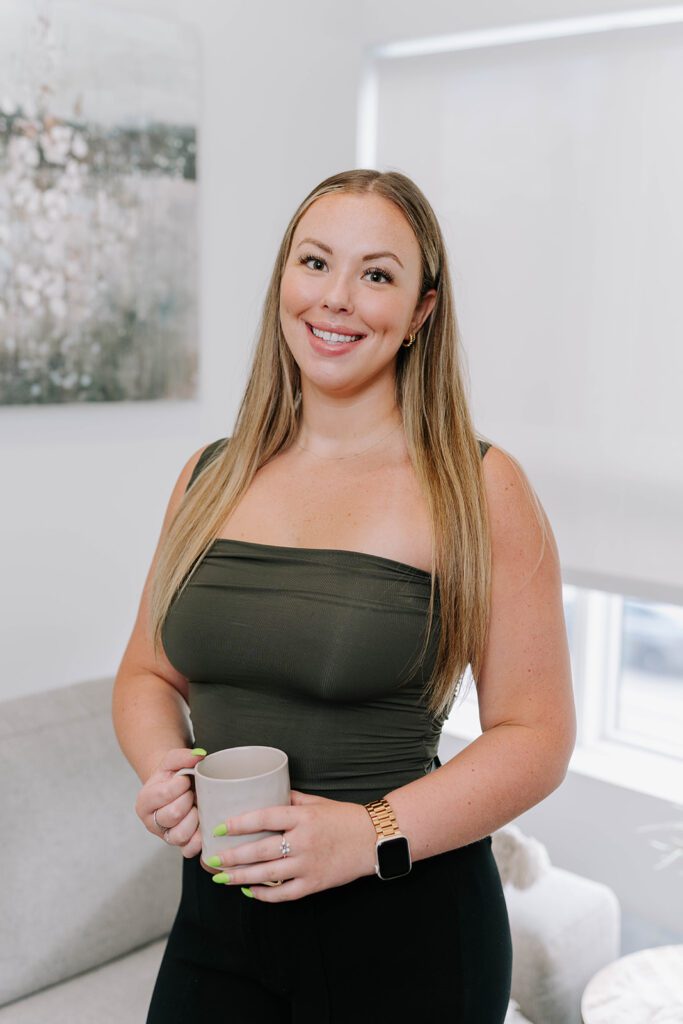
Meet Alana Brinson
Alana Brinson, MACP, is a Registered Psychotherapist at Resiliency Clinic who works with disordered eating, negative body image, and low self-esteem.
She uses a trauma-sensitive approach that draws on cognitive behavioural therapy, solution-focused brief therapy, mindfulness, and self-compassion, and she shared her clinical feedback on this post.
Alana sees older adolescents and adults, in person in Ottawa and virtually. Read Alana’s full bio.
Cynthia Ritchie, Registered Psychotherapist, works with body image and people’s relationship with food, alongside anxiety and low self-esteem. She draws on CBT, DBT, self-compassion, and mindfulness, and sees adults virtually, with weekday and evening times. Read Cynthia’s full bio.
Sydrie Alexandra Turenne, Registered Psychotherapist (Qualifying), works in English and French with clients 16 and older on body image, eating disorders, anxiety, and self-esteem, using CBT, DBT, and ACT. Read Sydrie’s full bio.
When to reach out
Many people think of therapy as something you start once there is a diagnosis, or once things have become unmanageable. It doesn’t have to work that way. Couples don’t need to wait until their relationship is in crisis to see a therapist, and you don’t need to wait until food feels out of control. Noticing a pattern you don’t like is reason enough to start. Working on it early builds the flexibility to cope when a harder season comes, so the pattern is less likely to pull you further in. Sometimes, the most helpful time to reach out is when you’re simply noticing, “I don’t like how much mental space this is taking up.”
If food, weight, exercise, or your body is becoming a source of anxiety, guilt, shame, or preoccupation, therapy can help you understand what’s happening and build healthier ways of coping. You deserve support, even if you don’t have an eating disorder diagnosis.
If you’re not ready to talk to a therapist yet, the National Eating Disorder Information Centre offers free, confidential support by phone and live chat. In Ottawa, Hopewell runs support groups for people 17 and older affected by eating disorders and disordered eating.
Start with a free 15-minute consult with Alana or another member of our team.
This post is not a replacement for professional psychological services.