FR
 EN
You want help with your relationship and your partner doesn’t want to try couples therapy. That’s something we hear pretty often, when people contact us about relationship counselling in Ottawa. They want change, but they haven’t decided to leave, and they don’t think the relationship is over. They can see something is wrong, they’re ready to get help understanding it, and the person they share a life with isn’t there yet.
Starting therapy alone can feel like picking up a problem that belongs to both of you. Individual therapy is still a good place to start, and it can be something you feel proud of, rather than something you resent your partner for.
You can’t make someone else ready
Readiness for change is not something you can hand to another person. You can ask, and you can explain what it would mean to you if your partner were willing to try, but you can’t instill it into someone else.
Reluctance tends to come from somewhere specific. It might be a fear of being blamed or criticized, a belief that talking about a problem makes it worse, or a bad experience with therapy years ago that nobody ever revisited. None of that is yours to solve. What you can change is how you show up in the relationship, and your own therapy can help with this type of change.
What relationship counselling in Ottawa looks like when you start alone
Sessions focus on you and the pattern the two of you keep repeating. At the Resiliency Clinic, that means tracing where your reactions came from before deciding what to do with them.
When a conversation gets heated, your body can read it as a threat, the same way it would read real danger. Shutting down is one way of getting away from that threat, and firing back is another. Both have a history, and both usually made sense or protected you at a different time in your life. Once you can see where a reaction comes from, and recognize it as an adaptive skill, you can consider change.
In sessions, you learn to recognize what gets activated in you and how early you can catch it, to settle your body in the moment instead of hours later, and to communicate clearly without withdrawing or losing your temper. “Turning towards” your partner instead of turning away, or turning against them with angry words, is so much harder than it sounds. Many clients need a lot of practice and support to break through the invisible barriers holding them back. Sometimes they have to learn to tolerate a lot of discomfort to make this change and be vulnerable in the relationship.
One thing you can try before your first session: the next time a conversation starts sliding toward the usual argument, notice what happens in your body first. A tight jaw, the pit in your stomach, the urge to leave the room. Catching that moment is where changing the pattern starts.
One person changing a pattern changes the system
Relationships are systems. When one person changes how they respond, the other person has to respond to something new. Our founder, registered clinical psychologist Michelle Sorensen, calls this the ripple effect of therapy: one person’s growth changes the people around them.
You stop going silent and start saying what you need, plainly and without an edge, and your partner has less to defend against. The argument that used to last hours goes somewhere different because you didn’t play your usual part in it and the pattern is changing.
Seeing one partner approach things differently can change how the other person feels about therapy, and some couples come to couples therapy months after one of them started alone. If the reluctant partner sees their significant other making positive changes, they may warm up to the idea or be less fearful of couples therapy “making things worse”. That isn’t guaranteed, and it shouldn’t be the reason you go. You live in this relationship every day, and how you handle it impacts your own well-being, whatever your partner decides. You could start with the decision to focus on yourself for 6-8 weeks, engaging in your own therapy and self-help, and then see what happens at home between the two of you.
Why going alone can feel unfair
If you go and they don’t, it can feel like you’re carrying the relationship on your own. Resentment is a signal that you are giving more than you are getting back. It’s worth paying attention to, and individual therapy is one of the few places where you can look at it closely. That often leads somewhere you might not expect, toward saying no to things you’ve been agreeing to and asking for more from others. A little guilt is better than a boatload of resentment.
If you are the reluctant partner reading this, and have a spouse who has done some, or a lot, of individual therapy to try to fix things, consider commending them and acknowledging their effort. Perhaps even open up about why it’s hard for you, or what you plan to do yourself to work on the relationship or your own mental health. This could mean the world to your spouse.
If your partner does come around
If they eventually agree, couples counselling at Resiliency Clinic uses Emotion-Focused Therapy, which centres on the bond between two people. Coming in with months of your own therapy behind you means you aren’t starting from the beginning.
Starting on your own
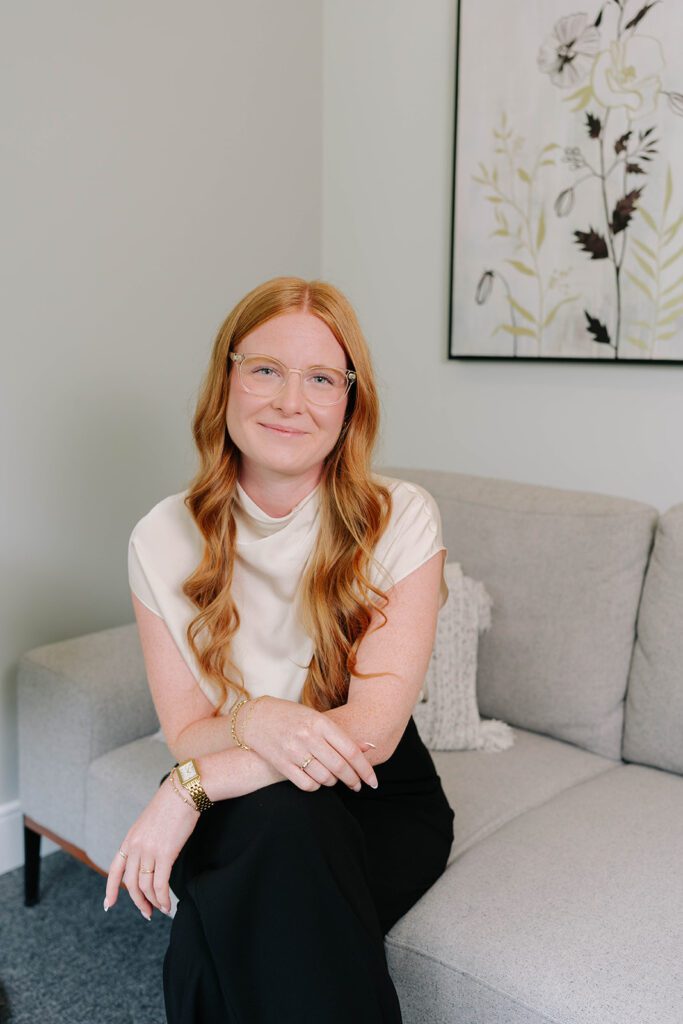
Our team has a strong focus on relationships, including in individual therapy. Meghan Mitchell is one of the therapists accepting individual clients both in person and virtually, with flexible hours. She works one-on-one with people on a broad range of relational issues, and also focuses on postpartum support and men’s mental health.
Our founder, registered clinical psychologist Michelle Sorensen, reads every new inquiry herself and matches you with a therapist based on fit rather than availability. Sessions are in person in Ottawa or virtually across Ontario and Quebec, in English or French, and a sliding scale spot is sometimes available.
You don’t have to wait for your partner to be ready before you start taking care of your part of the relationship. Sometimes, one person making a change can be the beginning of a much bigger change.
Réserver une consultation gratuite de 15 minutes to talk through whether this is the right place to start.
Cet article ne remplace en aucun cas les services psychologiques prodigués par des professionnels.